Why the Supreme Court Called a Tomato a Vegetable
In 1893, the United States Supreme Court ruled that a tomato is a vegetable. Every botanist in the room could have told the justices otherwise. A tomato grows from a flower and carries its seeds inside it, which makes it a fruit by any definition science uses. The case was never about botany, though. It was about a tariff, and the answer that mattered was how people actually ate the thing, not what a textbook called it.
The case that decided it
The dispute was Nix v. Hedden, and it started with money, not curiosity. John Nix and Company imported tomatoes into New York and paid duty on them under the Tariff Act of 1883, which taxed imported vegetables but let fruit in duty free. Nix sued the tax collector, Edward Hedden, to get the money back, arguing that a tomato is botanically a fruit and should never have been taxed as a vegetable in the first place.
In 1893 the Supreme Court ruled against him, unanimously. Justice Horace Gray wrote that botanical classification had no bearing on the law. What mattered was common parlance, ordinary language, and in ordinary language a tomato is eaten with the rest of dinner, not for dessert like an apple or a plum. Cooks and grocers had already decided the tomato was a vegetable long before the Court did. The ruling just made it official, and the tax stuck.
A fruit that arrived as a curiosity
Long before any of that, the wild ancestor of the tomato grew in western South America, in what is now Chile, Peru, and Ecuador. Exactly where it was first domesticated into something like the tomato we know, roughly seven thousand years ago, is still debated between South America and Mexico. What is settled is the name. Tomato comes from tomatl, a Nahuatl word roughly meaning the swelling fruit, by way of Spanish tomate.
The plant reached Europe fast. Within a few years of Hernan Cortes's 1521 conquest of Tenochtitlan, tomato seeds were on ships bound for Spain, and the plant grew easily in the Mediterranean climate. What did not travel easily was trust. It would be centuries before most of Europe treated the tomato as food rather than a strange import to look at.
Why Europe thought it might kill you
The suspicion had a real botanical root. Tomatoes belong to the nightshade family, the same family as deadly nightshade and mandrake, plants Europeans already knew could kill. A new fruit from that family, with no track record, was not an easy sell. The tomato's own scientific name carries the memory of that fear: lycopersicum, wolf peach, a label the ancient physician Galen had used for an unrelated plant and that a Renaissance botanist later pinned, more or less by guesswork, onto the tomato.
England held out longest. The tomato was grown there as an ornamental curiosity for generations before anyone treated it as edible, and English speakers did not even settle on the word tomato for a while. Earlier, they called it the love apple, borrowed from the French pomme d'amour. Tomatoes were common in Spanish and Italian kitchens well before most English tables would touch them.
How it became Italian
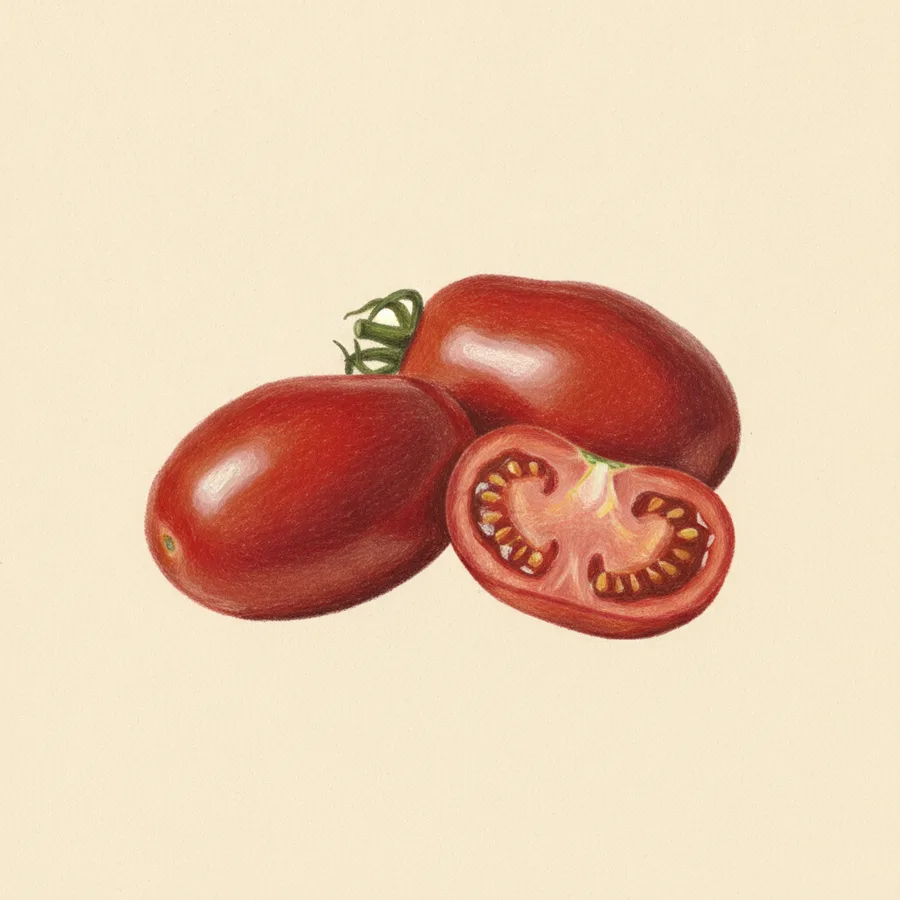
The tomato's association with Italian food is real, but it is much younger than most people assume. The plant reached Italy in the mid 1500s and spent its first couple of centuries there mostly as a garden novelty, not an ingredient. It took roughly two hundred years for tomatoes to work their way into Italian cooking in earnest, especially around Naples, where the plum-shaped San Marzano became the variety cooks reached for and helped build a cuisine that, to modern eyes, looks like it was always there.
The poisoning that never happened
The most famous American tomato story is also the one with the least evidence behind it. As it is usually told, a man named Robert Gibbon Johnson stood on the courthouse steps in Salem, New Jersey in 1820 and ate a tomato in public to prove it would not kill him, while a crowd gathered to watch him die. It is a great story. It also appears nowhere in the historical record from anywhere near 1820.
The food historian Andrew F. Smith traced the legend to its actual origin and found it took shape more than a century later. A Salem postmaster passed the story to a historian, who published it in a 1940 book. A writer dramatized it further in 1946, and a CBS radio broadcast in 1949 finished the job of turning a colorful anecdote into settled fact. By the time the legend is set, Americans had already been eating tomatoes for decades. Thomas Jefferson was growing them at Monticello in 1789, and they were common enough on tables by the 1830s that no single act of courage was needed to normalize them.
What is left today
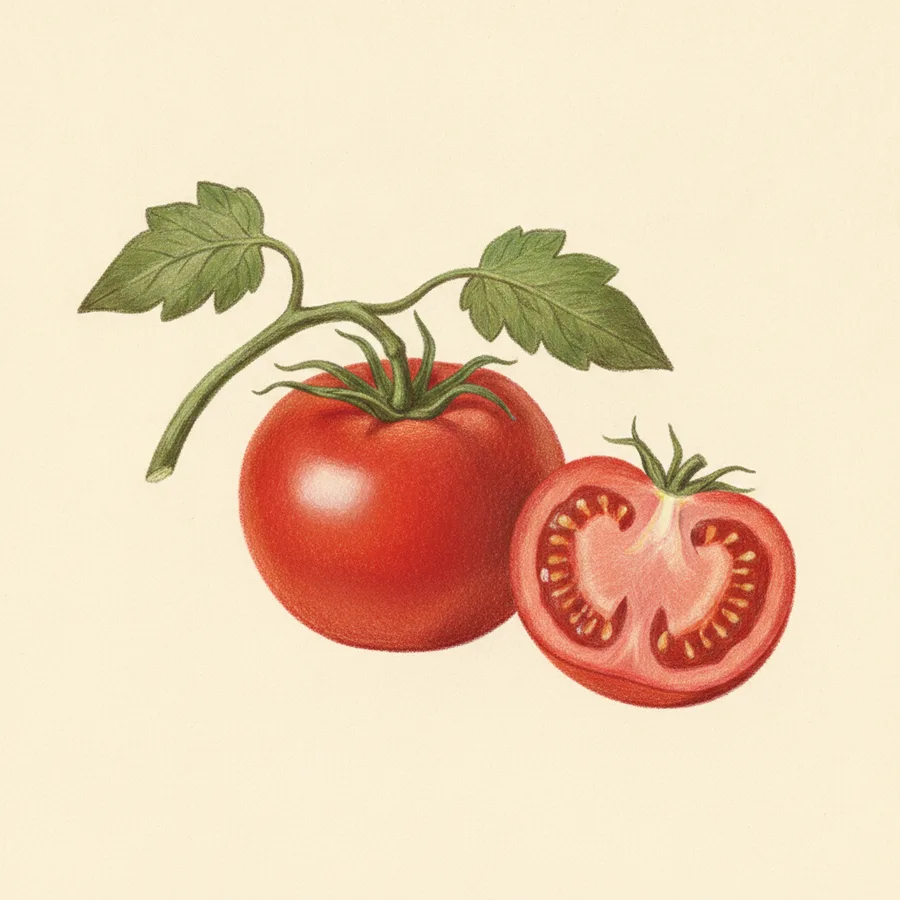
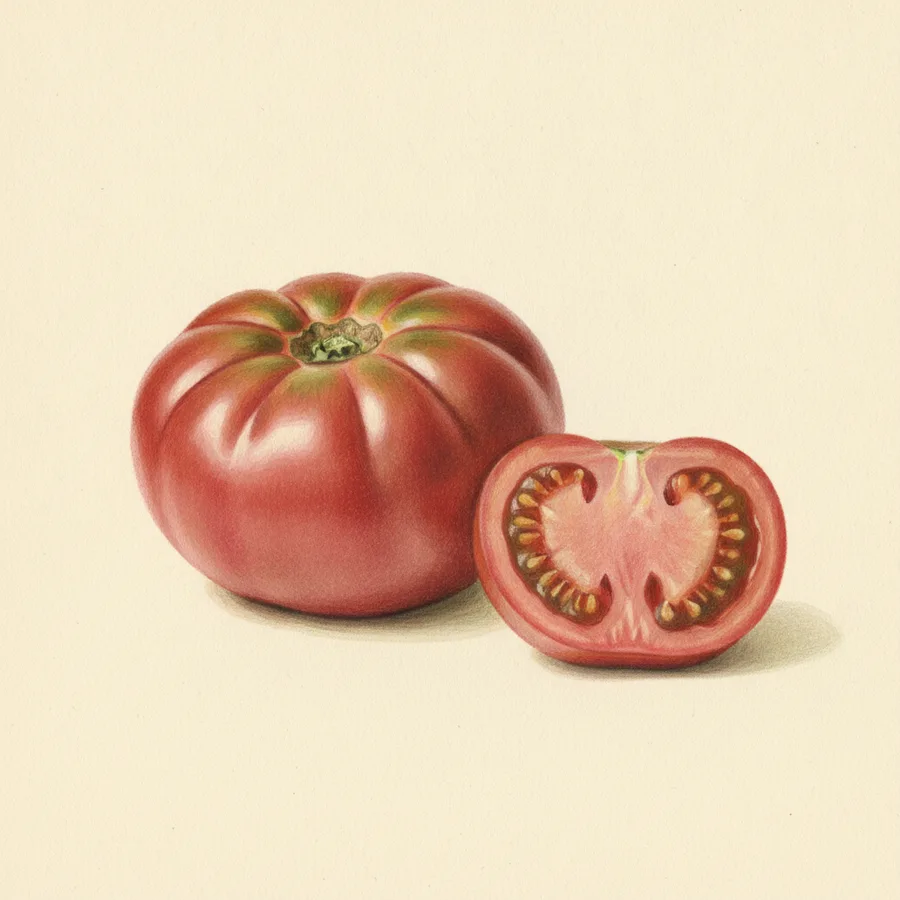
Almost none of this history is dangerous or theoretical anymore. The suspicion is gone, the tariff argument is settled, and the varieties on offer now range from modern hybrids bred for shipping to heirlooms carrying their own stories. Rutgers, bred in 1934 by Rutgers University and Campbell Soup Company for a balance of sweetness and acid, once made up more than sixty percent of the tomatoes grown commercially in America, before thinner-skinned, machine-harvest varieties pushed it aside. Depression-era names like Mortgage Lifter reflect the same instinct that drove all of this history: a good tomato was worth real money, worth a Supreme Court case, worth naming after the debt it helped a farmer pay off. The fruit Europe once feared is now just dinner.
Varieties mentioned
Sources
- Nix v. Hedden · Wikipedia
- Tomato · Wikipedia
- Robert Gibbon Johnson · Wikipedia
- tomato (n.) · Etymonline
- Rutgers tomato · Wikipedia
- Mortgage Lifter · Wikipedia