How to Save Tomato Seeds From Your Best Plants
The best tomato you grew this year can be free next year, and the window for arranging that is open right now. Seed saving is not a fall job. It happens at peak ripeness, in August and September, on fruit you were otherwise about to slice. The process itself is three days of doing almost nothing. The part that decides whether it works is the twenty seconds of thinking you do before you cut anything open.
The first question is not about seeds
Before you touch a knife, find out whether your variety is open-pollinated or a hybrid. This one fact decides whether the whole exercise works, and it is the reason most first-time seed savers end up disappointed a year later without understanding why.
Seed from an F1 hybrid germinates perfectly well. That is what makes the failure so quiet. The problem arrives the following summer, when the plants turn out to be a scattered mix rather than the tomato you saved from. Illinois Extension puts the distinction plainly: open-pollinated vegetables have traits that reliably carry through to the next generation, while hybrid offspring will not necessarily carry those desirable traits forward, which is why hybrid seed production has to be so tightly controlled in the first place.
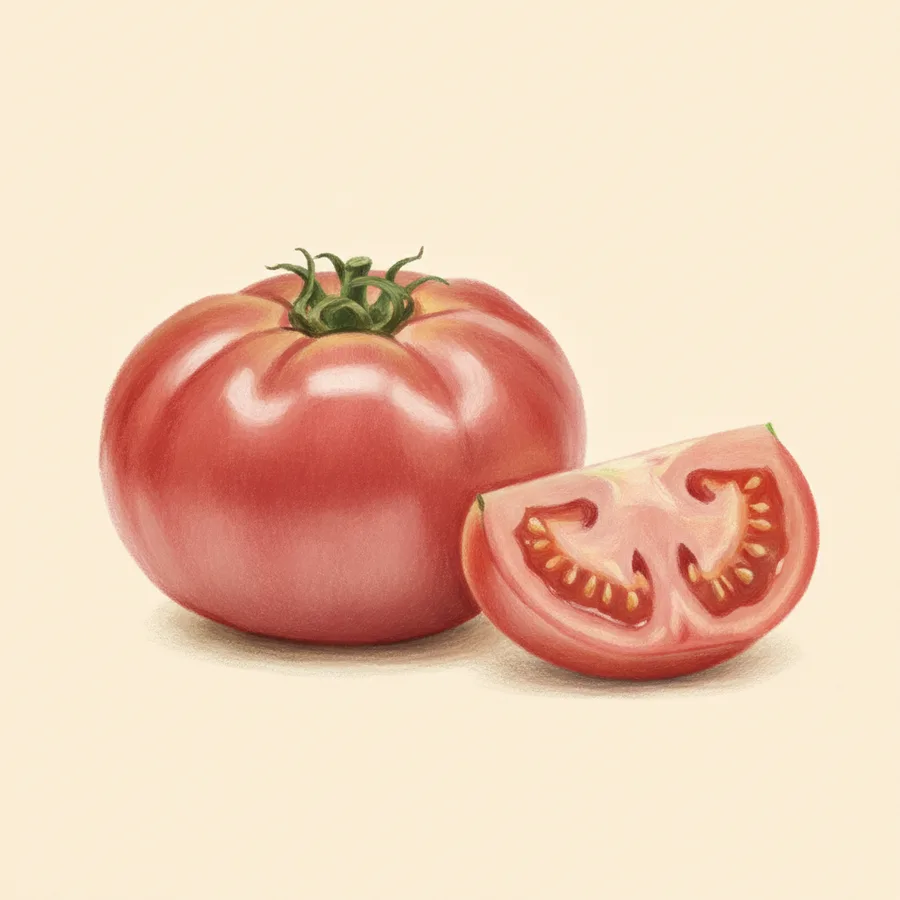
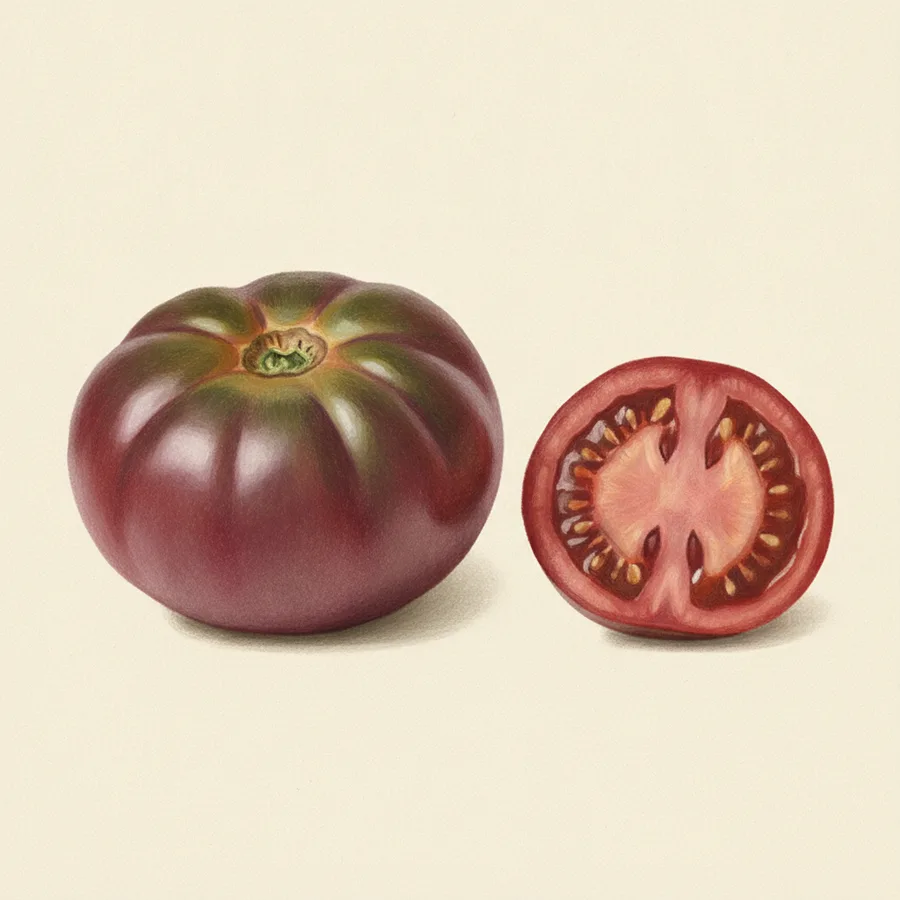
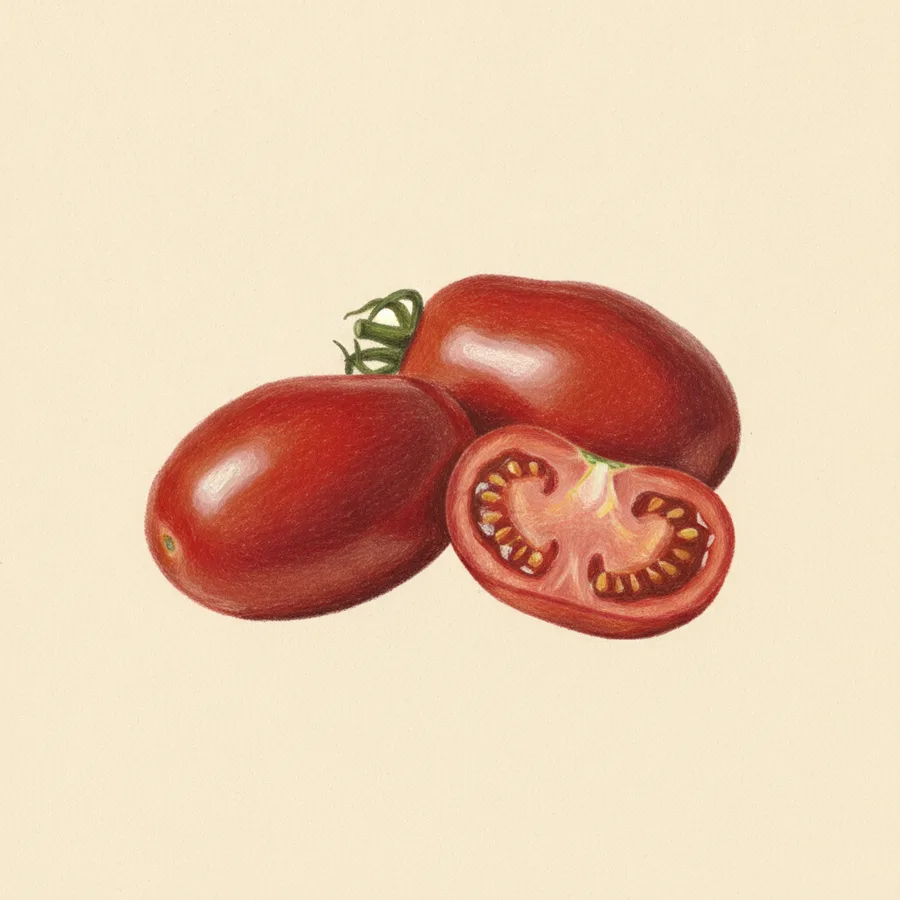
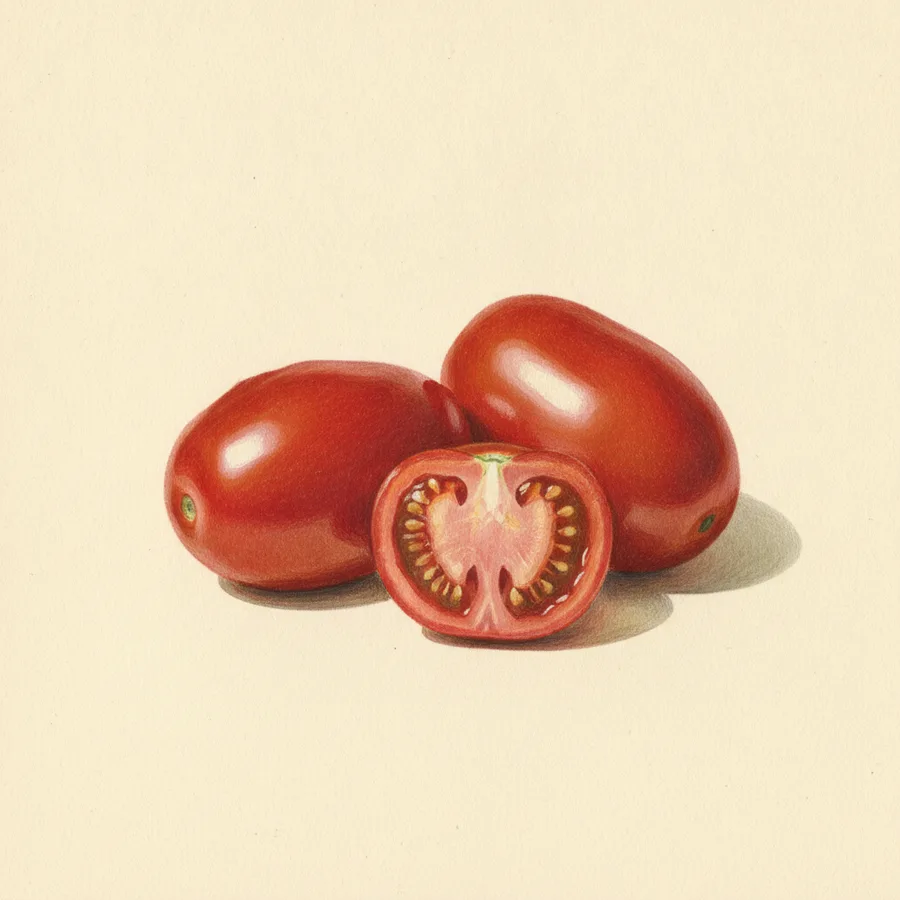
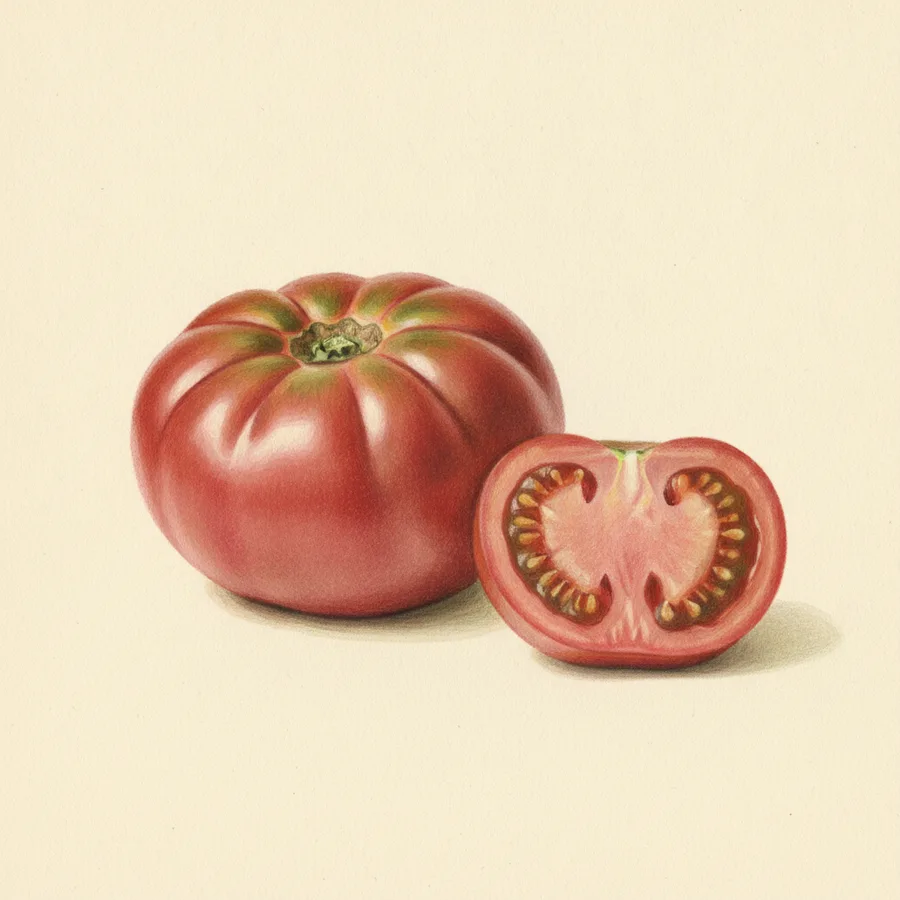
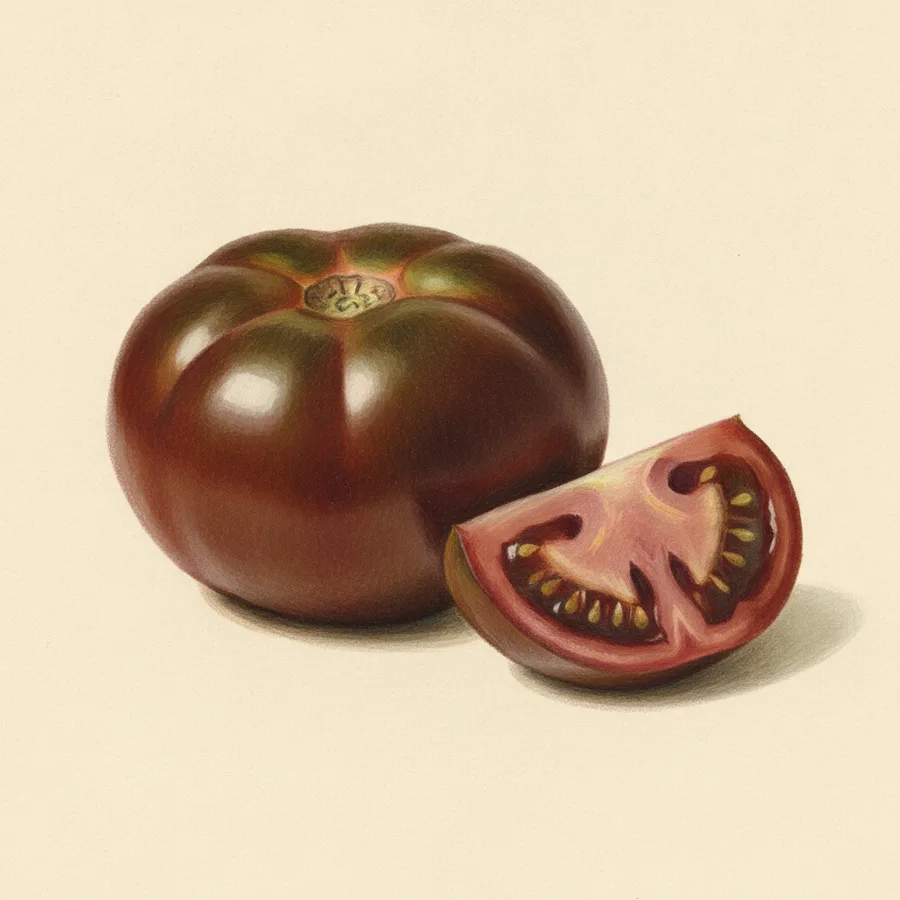
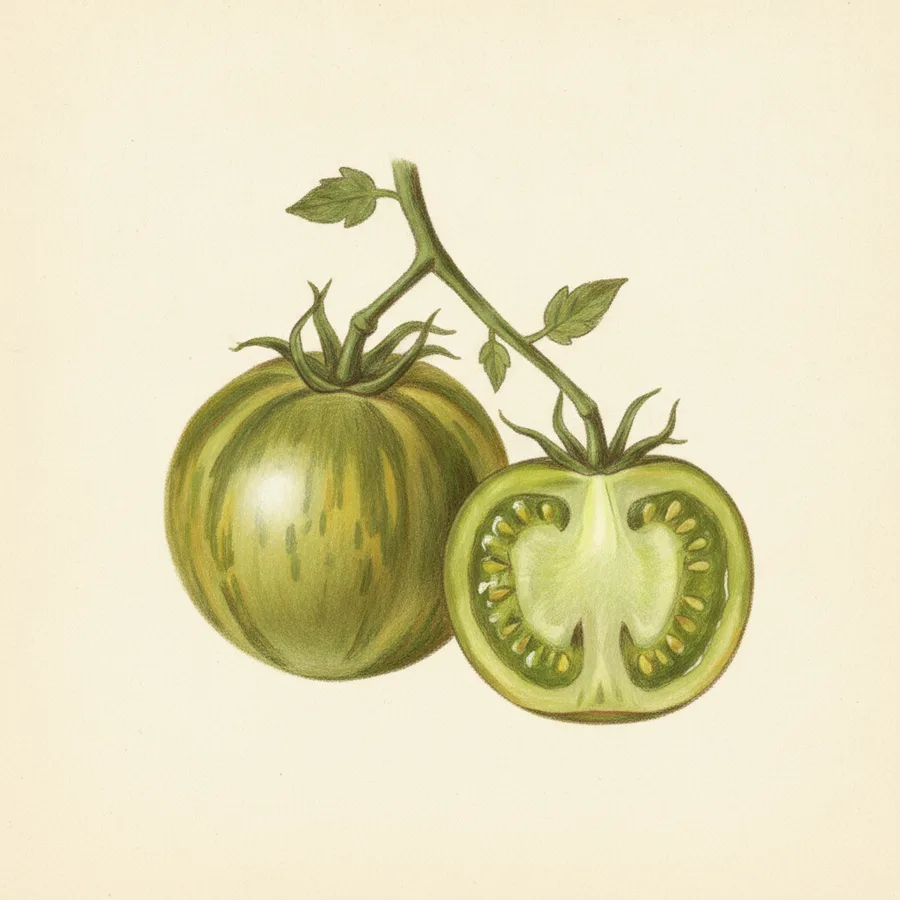
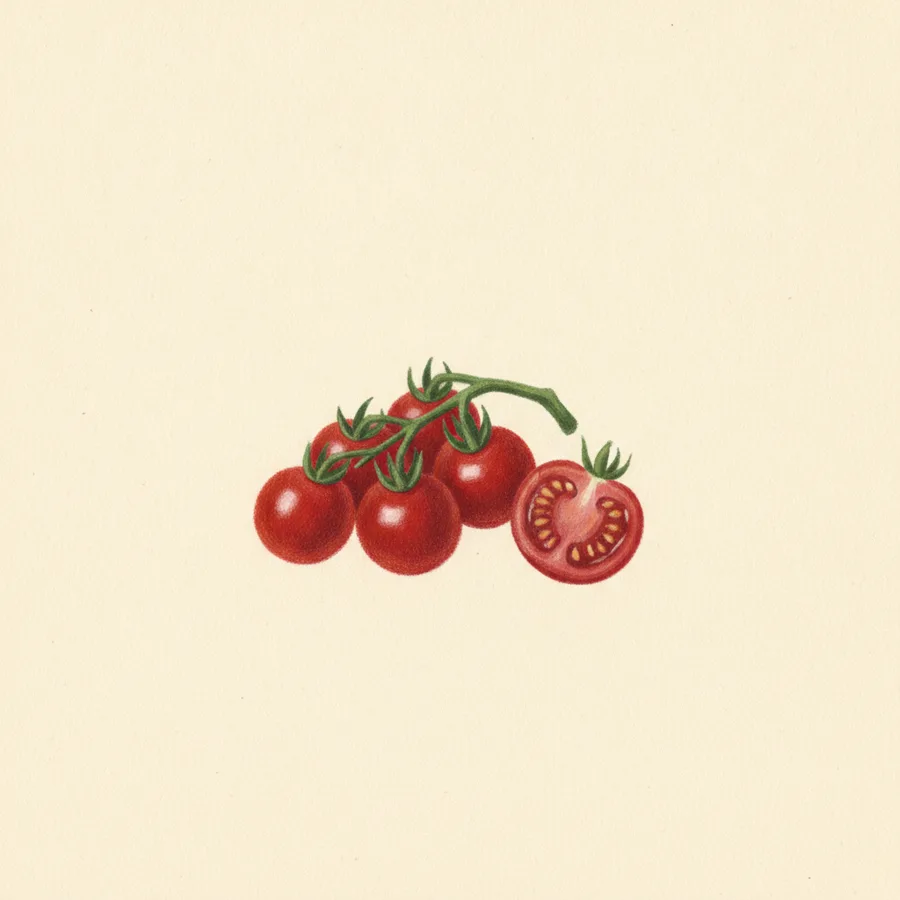
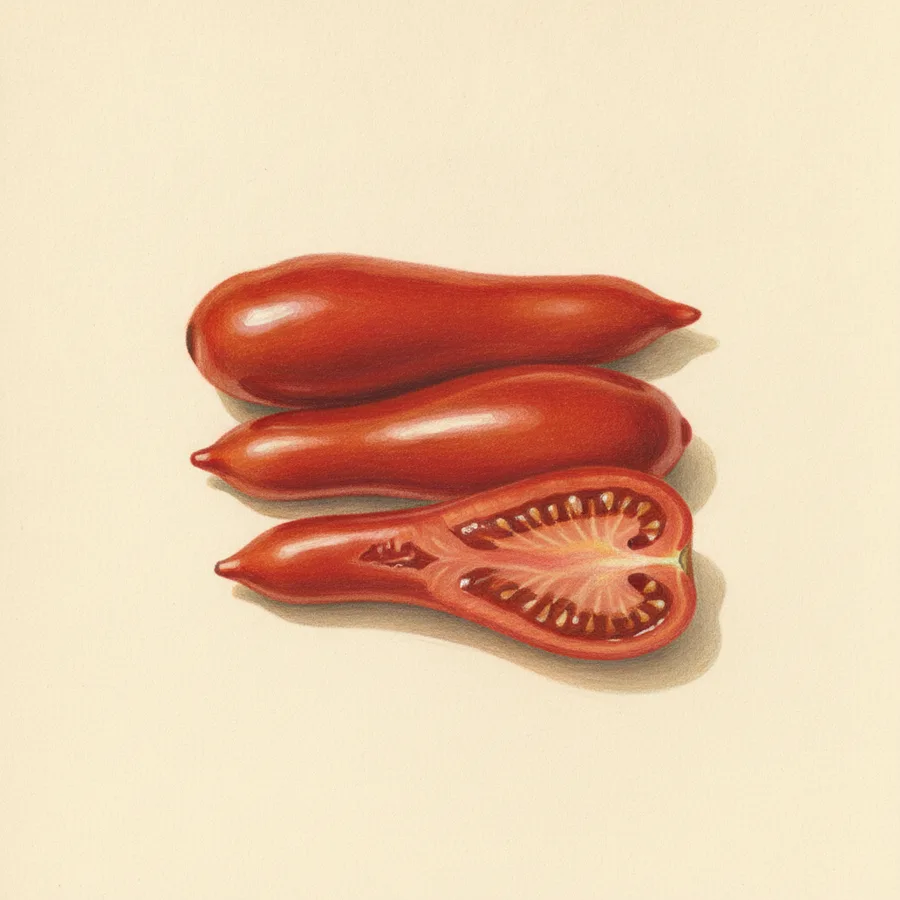
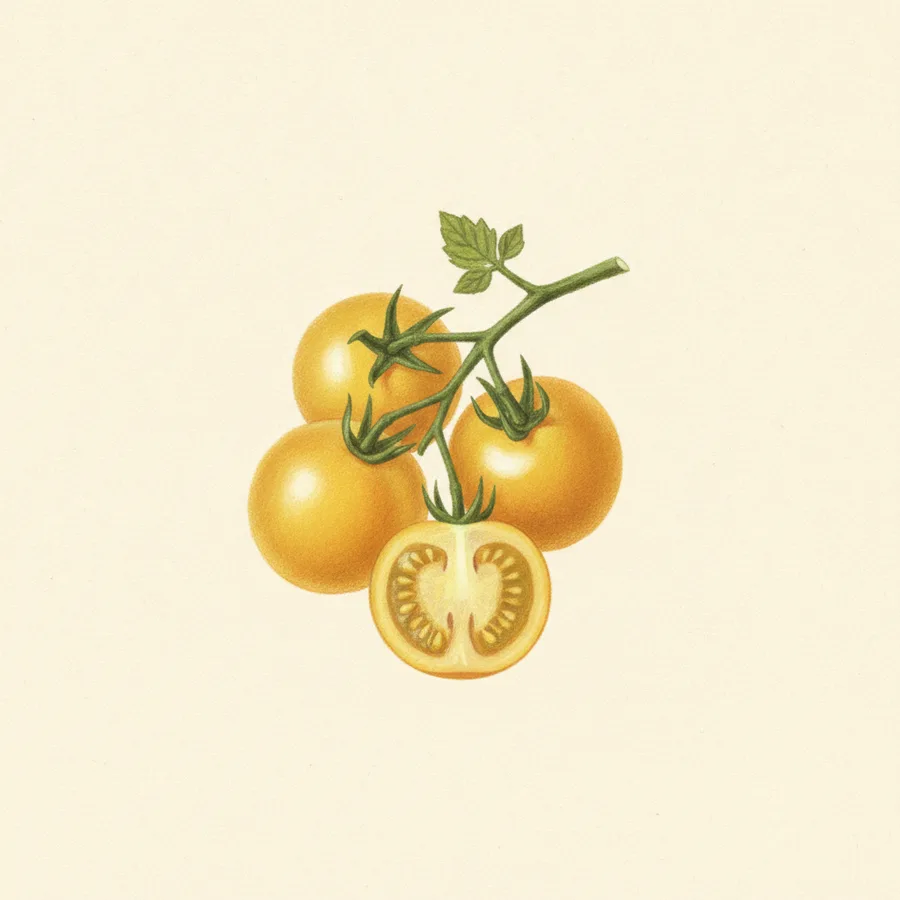
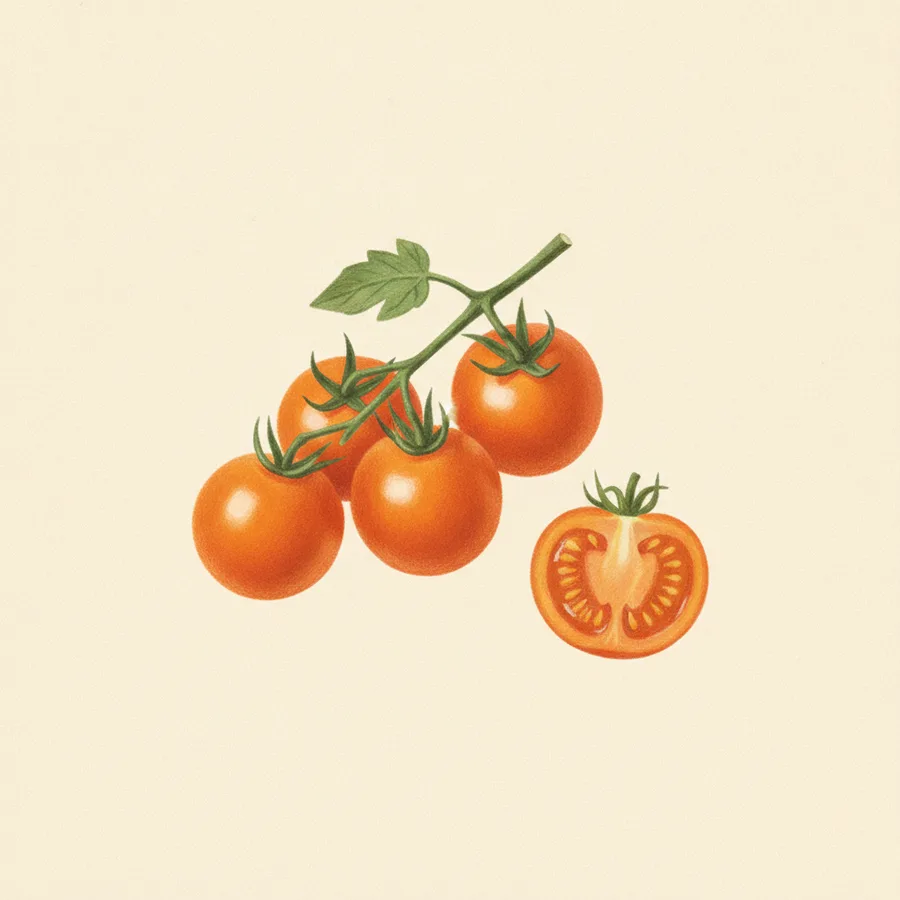
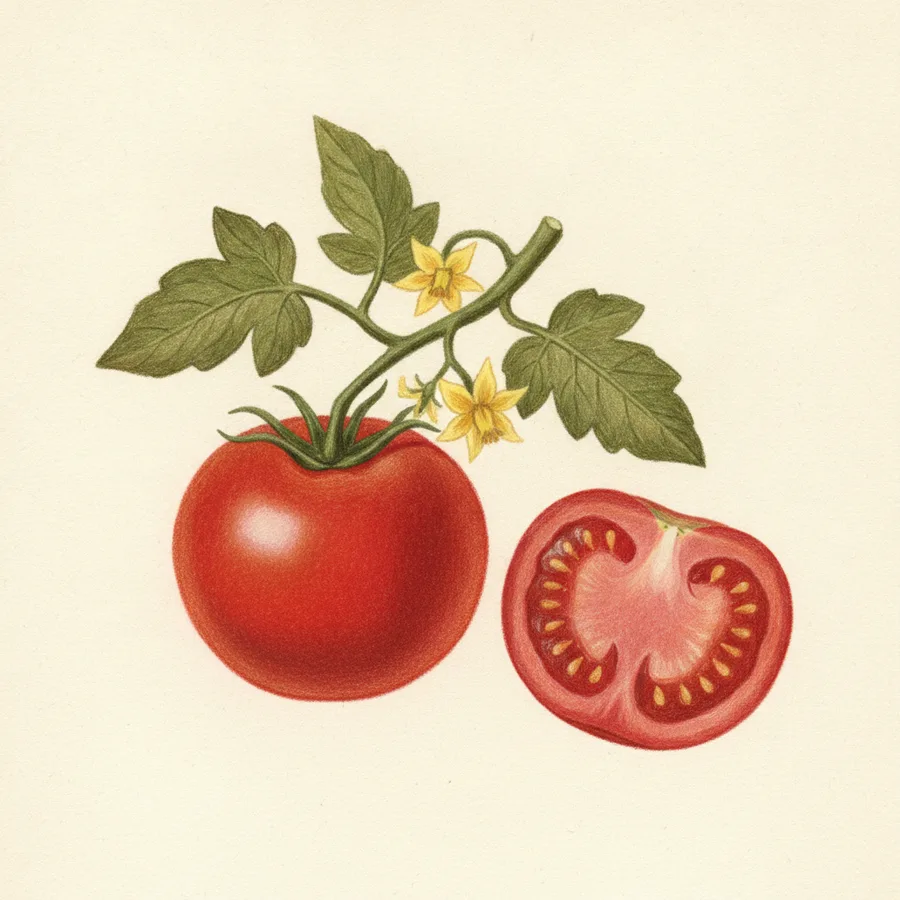
Every profile on this site records which one you have, in the breeding field. Sungold and Early Girl are hybrids, and so are Big Beef, Celebrity, Juliet and Mountain Magic. Brandywine, Cherokee Purple, Amish Paste, Black Krim and Mortgage Lifter are heirlooms, and San Marzano, Green Zebra and Matt's Wild Cherry are open-pollinated. Minnesota Extension names San Marzano and Brandywine specifically as varieties whose saved seed produces plants like the parents.
You can save seed from a hybrid if you want to. Just do it knowing you are starting a breeding project rather than keeping a variety, because stabilizing a hybrid into something that comes true takes several generations of selection. That is a real and rewarding hobby. It is not what most people mean when they say they want to save seed.
Choose the fruit, not just the variety
Seed saving is selection whether you think about it that way or not. Whatever you save from is what you get more of, so spend a minute choosing rather than grabbing whatever is nearest the edge of the counter.
Take seed from healthy plants only, and from fruit that is dead ripe but not gone over. The Organic Seed Alliance draws that line clearly: harvest when tomatoes are dead ripe, and select from healthy plants. Dead ripe is later than you would pick for a sandwich, which is exactly why seed saving pairs so well with a glut, when a few fruits are always slightly ahead of you.
Spread the collection out. Take fruit from several plants rather than one, and more than one fruit from each. A single fruit is one narrow sample, and part of the point of an open-pollinated tomato is the small amount of variation it carries. If you are keeping a landrace or anything visibly variable rather than a uniform named variety, that advice gets stronger: the Organic Seed Alliance suggests as few as 5 plants will maintain a uniform variety, but at least 20 for genetically variable populations.
Skip fruit from a plant that struggled, cracked badly, or came down with something, even if that particular tomato looks fine. You are choosing next year's parent.
The crossing question, answered honestly
Most advice on this is either alarmist or dismissive. The accurate version sits in between, and which half applies to you depends on the variety.
Tomatoes have perfect, self-fertile flowers and are primarily self-pollinating, which is why they are one of the easiest crops to save from at all. But the flower is not built the same way across every variety. The Organic Seed Alliance notes that nearly all tomato varieties developed after 1950 are self-pollinating because the flower encloses its own reproductive parts, while older varieties with exserted styles, meaning the stigma protrudes past the anther cone where an insect can reach it, outcross more readily.
That dividing line falls right across the heirlooms most people want to save. For varieties with an extruded style, the Organic Seed Alliance recommends planting 75 feet from another variety to prevent outcrossing. Almost nobody's home garden does that, which is worth saying plainly rather than pretending otherwise.
What it means in a normal garden: for a modern open-pollinated variety, save with confidence. For an old heirloom growing a few feet from three other heirlooms, accept that a small share of your saved seed may be crossed, and that you will not know until those plants fruit. If it matters to you, take seed from fruit set low and inside the plant rather than on the exposed outer trusses, or bag a flower truss in fine mesh before it opens and mark it. If it does not matter to you, sow a few extra and pull anything that comes up wrong.
The ferment: three days of doing nothing
Tomato seeds come wrapped in a gel sac, and that gel is the reason seeds do not germinate inside a ripe fruit sitting in the sun. Fermentation is how you remove it. It is also the step people overcomplicate.
Squeeze or scoop the seeds and their gel into a jar. The flesh is not needed and can go straight into whatever you were cooking. Add a splash of water, enough to make it sloppy rather than to fill the jar. Leave it somewhere warm and out of direct sunlight, and stir or swirl it twice a day.
On timing, two good sources say the same thing slightly differently. The Organic Seed Alliance gives 2 to 3 days at 70 to 85 degrees Fahrenheit. Minnesota Extension describes the endpoint rather than the clock: stir twice a day, and the seeds should sink to the bottom within five days. Use both. Warm room, stir it, and watch for the tell rather than the calendar, because a hot kitchen ferments faster than a cool basement.
You will get a layer of mold on top and it will smell bad. Both are normal and neither is a problem. What you are waiting for is the good, heavy seed dropping to the bottom while pulp, hollow seed and mold stay up top.
The one real mistake is going too long. Once the gel is gone the seed is exposed, warm and wet, and it will start to germinate right there in the jar. A sprouted seed cannot be dried and stored. When the seed sinks, stop that day.
Two things you may read elsewhere are left out of this guide on purpose: a specific germination-rate improvement from fermenting, and the claim that fermentation kills seed-borne disease. Both circulate widely with numbers attached. Neither traces to a source solid enough to repeat here.
Rinse, dry, and the paper towel trap
Pour off the top layer with the mold, the pulp and anything still floating. Add clean water, swirl, let the good seed settle, pour off again. Repeat until what is left in the bottom is clean seed and clear water. Minnesota Extension describes exactly this: pour off the liquid, rinse the seeds, and spread them out to dry.
Dry them on a screen, a plate, a coffee filter or a ceramic dish. Not on a paper towel, unless you are willing to cut the towel into squares and plant the paper, because tomato seed glues itself to paper as it dries and you will spend an evening picking at it with a fingernail.
Spread the seed in a single layer so it is not sitting in a wet clump, keep it out of direct sun and out of the oven, and give it days rather than hours. Heat is the thing that quietly kills viability. A properly dry tomato seed snaps or shatters under pressure instead of bending.
Storage, and an honest disagreement about how long it keeps
Cool, dark, dry, and in something that closes. Beyond that, the two sources used here disagree with each other, and it is more useful to say so than to average them into a number neither one gives.
The Organic Seed Alliance is talking to seed producers and gives real conditions: seed dried to 5.5 percent moisture or less can be stored 3 to 7 years at 40 to 60 degrees Fahrenheit and 40 percent relative humidity or less. Minnesota Extension is talking to home gardeners and is far more conservative: store at 32 to 41 degrees in tightly sealed containers, and use saved seed within one year, because the older the seed the lower the germination and vigor.
Both are defensible, and the gap between them is mostly about how well you can actually dry and hold the seed. A home gardener with a paper envelope in a kitchen drawer should plan on the Minnesota answer. Seed properly dried and kept cold and sealed behaves more like the Organic Seed Alliance answer, which is why old seed from a jar in a cold basement so often still comes up.
The way to stop guessing is to test. Roll ten seeds in a damp paper towel, bag it, keep it warm, and count how many sprout in a week or so. Seven or more and sow normally. Three or four and sow thickly. None, and you have saved yourself a whole spring of wondering what went wrong with your seed-starting setup.
Label it before you walk away
This is the most common way a seed-saving effort actually fails, and it has nothing to do with technique.
Write the variety and the year on the drying dish, not later on the envelope. Four plates of small flat cream-colored seeds are indistinguishable, and you will be certain you can tell the paste tomato from the beefsteak right up until the moment you cannot. If you are saving several varieties in the same week, keep the jars apart on the counter and label those too.
If you keep notes, record the parent as well: which plant it came from, how it performed, whether the season was wet or dry. Next August that note is worth more than the seed.
The short version
Check that the variety is open-pollinated or heirloom, not a hybrid. Take dead-ripe fruit from healthy plants, several fruits across several plants. Scoop the seed and gel into a jar with a splash of water, keep it warm, stir twice a day, and stop the moment the good seed sinks, which is usually two to three days and should be under five. Rinse until the water runs clear, dry in a single layer on anything except paper towel, label it immediately, and keep it cold, dark and sealed.
That is the whole thing. The tomato you liked most this year is the one to start with, and the cost of finding out whether it works is one fruit you were going to eat anyway.
Varieties mentioned
Keep reading
- Open-Pollinated Alternatives to Your Favorite HybridsIf the variety you love turns out to be a hybrid, this is the list of open-pollinated varieties that get you close, and that you can save from forever.
- When Are Tomatoes Ripe? A Variety-by-Variety GuideSeed fruit wants to be dead ripe, which is later than eating ripe, and it is variety-specific. This is how to read it.
- Buried in Tomatoes? What to Do With a Mid-Summer GlutSeed saving costs you nothing during a glut. The flesh still gets eaten, frozen or canned; only the gel goes in the jar.
- End-of-Season Tomato Cleanup: What Actually Survives WinterEarly blight and Septoria both persist on tomato seed, which is a reason to be choosy about the plants you save from.
Sources
- Tomato Seed Production: Quick Reference (pollination biology, isolation distance, fermentation, drying, storage) · Organic Seed Alliance
- Saving vegetable seeds (tomato fermentation method, drying, storage conditions, hybrid vs open-pollinated) · University of Minnesota Extension
- Open-Pollinated vs. Hybrid: An important distinction when saving seeds · University of Illinois Extension