Buried in Tomatoes? What to Do With a Mid-Summer Glut
Every year it happens the same way. For two months you wait, and then in the space of about ten days the plants decide to hand you everything at once. There is a bowl on the counter, a second bowl next to it, and a paper bag on the floor you are trying not to look at. This is the good problem, but it is still a problem, and the clock on it is short. Here is how to work through a glut without losing half of it to the compost, in the order the decisions actually come up.
Triage the pile before you plan anything
Before you decide what to make, sort what you have. A glut is never one uniform pile, and the fruit that needs using today is not the fruit you want to put up for winter.
Work in three groups. First, anything cracked, split, or with a soft spot goes in the use-today pile: those are fine to eat or cook immediately, and they will not wait. Second, firm and fully ripe fruit is your preserving stock, and it is the group worth handling carefully. Third, anything still short of ripe goes back on the counter to finish.
This sort matters more than it sounds, because the preserving methods below have different tolerances. Freezing and drying are forgiving. Canning is not, and it has real requirements about fruit quality that we get to further down.
Counter or fridge, answered honestly
The rule everyone repeats is never refrigerate a tomato. That is a decent default and an oversimplification, and in a glut the distinction actually matters, because you cannot fit ten days of harvest on one counter.
What the research supports is narrower than the slogan. A 2016 study in PNAS found that the volatile compounds responsible for tomato flavor are sensitive to temperatures below about 12 degrees Celsius, roughly 54 Fahrenheit, and that while some of the genes involved recover after a return to room temperature, some do not. That is the real basis for the warning.
But a 2020 study in Frontiers in Plant Science tested the household version of the question and found something more forgiving. Working with fruit that was already ripe, the authors compared four days at 20 degrees against four days at 7 degrees Celsius and reported no significant difference in any measured parameter, including sensory analysis. Their conclusion was that 7 degrees is not detrimental to the flavor of ripe fruit under those conditions, and that the variety mattered more than the storage temperature did.
Put together, the practical version is about ripeness stage and duration rather than the appliance. A tomato that is still ripening should stay on the counter, because chilling interrupts flavor it has not finished making. A tomato that is already dead ripe and about to go over is better off in the fridge for a few days than rotting on the counter. Long cold storage is where the losses become real, so treat the fridge as a short pause, not a parking spot.
Freezing is the no-skill option, and it is underrated
If you do one thing with a glut, freeze it. There is no equipment to buy, no processing time to look up, and no safety math, because freezing is a quality decision rather than a safety one.
You do not need to blanch tomatoes before freezing them, and you do not need to peel them first. Nebraska Extension is explicit that tomatoes do not require blanching and that you can freeze them raw with or without their skins. Wash them, core them, and put them in a bag.
The trick that makes this worth doing is what happens on the way back out. Run a frozen tomato under warm water for a few seconds and the skin splits and slides off in one piece, with no boiling water and no ice bath. You have effectively deferred the peeling step to a January afternoon when you have time for it.
One honest caveat: frozen tomatoes thaw soft and watery, so they are cooking stock, not salad. NCHFP says the same thing plainly, that thawed tomatoes should be used for cooking or seasoning because they will not be solid.
On how long they keep, we are not going to invent a number. NCHFP does not publish a tomato-specific freezer window, and the figures floating around online range from three months to eighteen with no sourcing behind them. The one authoritative figure we found is Nebraska Extension's general guideline that frozen vegetables are best eaten within about eight months. Treat that as a quality clock, not a safety deadline.
Drying, and the oil mistake to avoid
Drying is the other low-risk path, and it turns a bulky glut into something that fits in a jar on a shelf. University of Arizona Cooperative Extension gives the working numbers: no blanching needed, slice about half an inch thick, and run a dehydrator at 125 to 140 degrees Fahrenheit until the pieces are brittle or crisp. Cherry tomatoes get halved. Stored airtight somewhere cool and dark, dried tomatoes hold quality for up to about six months, longer if you refrigerate or freeze them.
Now the part worth reading twice. The natural next thought is to cover your dried tomatoes in olive oil with a clove of garlic and some herbs, the way the jars at the store look. Do not store that at room temperature.
Oregon State University Extension is direct about why: oil creates an oxygen-free environment, which is exactly what Clostridium botulinum needs to grow, and the garlic and herbs are low-acid additions carrying the bacteria in. Commercial versions are acidified to prevent this. OSU states that home versions cannot be recommended as shelf-stable because the research has not been done, and that dried tomatoes packed in oil with garlic or herbs must be refrigerated and used within four days, or frozen.
The simple way around this is to keep the two apart. Store your tomatoes dry on the shelf, and add the oil, garlic, and herbs to the portion you are about to eat.
Canning: the rule you cannot skip
Canning is where a glut becomes a winter pantry, and it is also the only method here with a genuine hazard attached, so it is worth being precise.
Tomatoes sit right on the boundary between acid and low-acid foods, near pH 4.6, which is the line that determines whether boiling-water processing is sufficient. Because individual tomatoes fall on either side of it, the USDA requires added acid.
The amounts are specific. Per quart: 2 tablespoons of bottled lemon juice, or half a teaspoon of citric acid, or 4 tablespoons of 5 percent vinegar. Per pint: 1 tablespoon of bottled lemon juice, or a quarter teaspoon of citric acid. The acid can go straight into the jar before you fill it, and you can add sugar to offset the taste if you want to.
Two things about that rule surprise people. The first is that it applies even if you are using a pressure canner. The USDA guide states that all preparation steps are still required when you choose the pressure option, and that this includes acidification. Pressure canning does not substitute for acid.
The second is that the lemon juice has to be bottled, not fresh. This is not fussiness. Bottled lemon juice is standardized to a known acidity under FDA regulation, while fresh lemons vary by variety, maturity, growing conditions, and storage, so a fresh lemon gives you an unknown quantity of the one ingredient doing the safety work.
There is also a hard line about which fruit goes in the jar. The USDA guide carries this as a bolded caution: do not can tomatoes from dead or frost-killed vines. It asks for disease-free, preferably vine-ripened, firm fruit. The guide states the rule without explaining it; extension services fill in the reason, which is that tomatoes from unhealthy or dead vines can drift above pH 4.6 and may carry additional organisms the process time was not calculated for. Michigan State adds damage and overripening to the same acidity-risk list. Those tomatoes are not wasted, they just go to the freezer or the dehydrator instead.
One clarification that gets muddled constantly: not every tomato product is acidified. Whole, crushed, juiced, and standard sauce all get acid. Tomato and vegetable mixtures like spaghetti sauce with onions, peppers, and mushrooms are a different category entirely, processed as low-acid foods in a pressure canner on their own tested recipe, and they must never be boiling-water canned.
Why we are not printing processing times
You will notice there are no minutes above. That is deliberate, and the reason is worth understanding before you start.
Processing time for tomatoes depends on four independent variables: which product you are making, the jar size, your altitude, and whether you are using a boiling-water or pressure canner. These are not interchangeable, and the gaps between them are not small. In the USDA guide, the same whole tomatoes in the same quart jars take about 45 minutes in a boiling-water canner when packed in water, and 85 minutes when packed in tomato juice instead. A cook who remembers the first number and uses the second pack style under-processes by 45 minutes.
So look up the current time for your exact product, pack style, jar size, and altitude, every season, from the National Center for Home Food Preservation. It is the source the USDA guide itself is published through, and it is free. Our citations below link straight to their tomato section.
One thing worth knowing while you are there: the USDA notes that using a pressure canner produces higher quality and more nutritious canned tomato products than the boiling-water method. Boiling-water is the familiar approach, not the better one.
Match the method to what you actually grew
A glut is rarely one variety, and the sorting job is easier if you let the fruit decide.
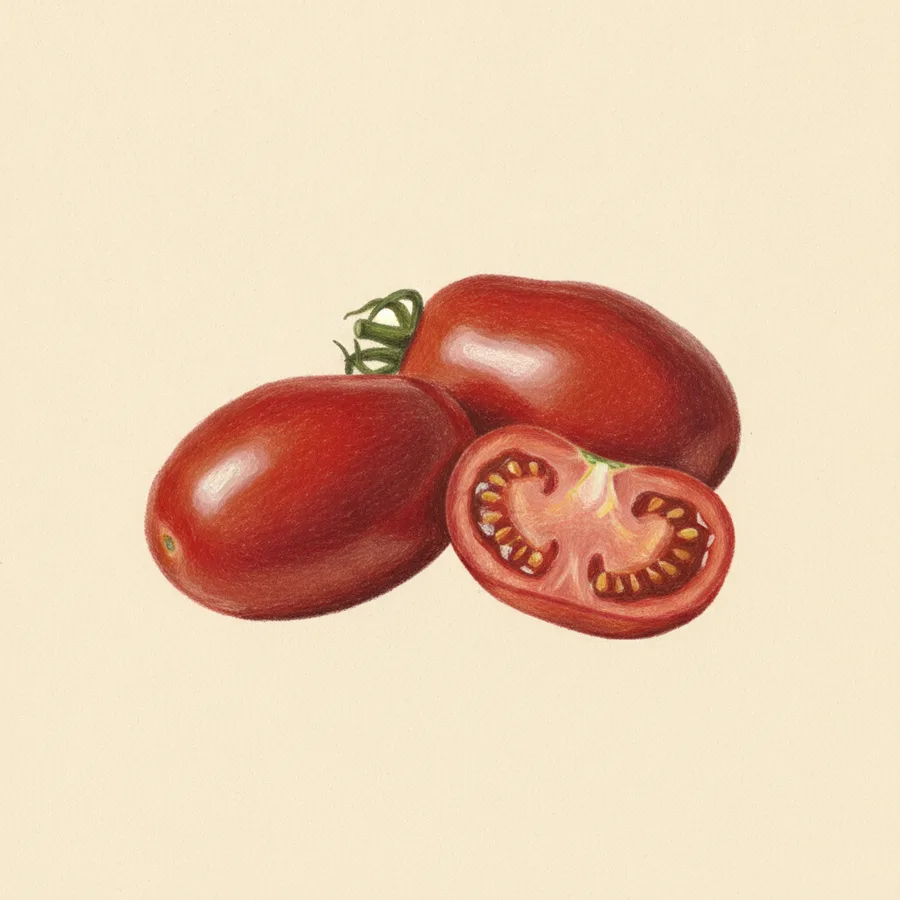
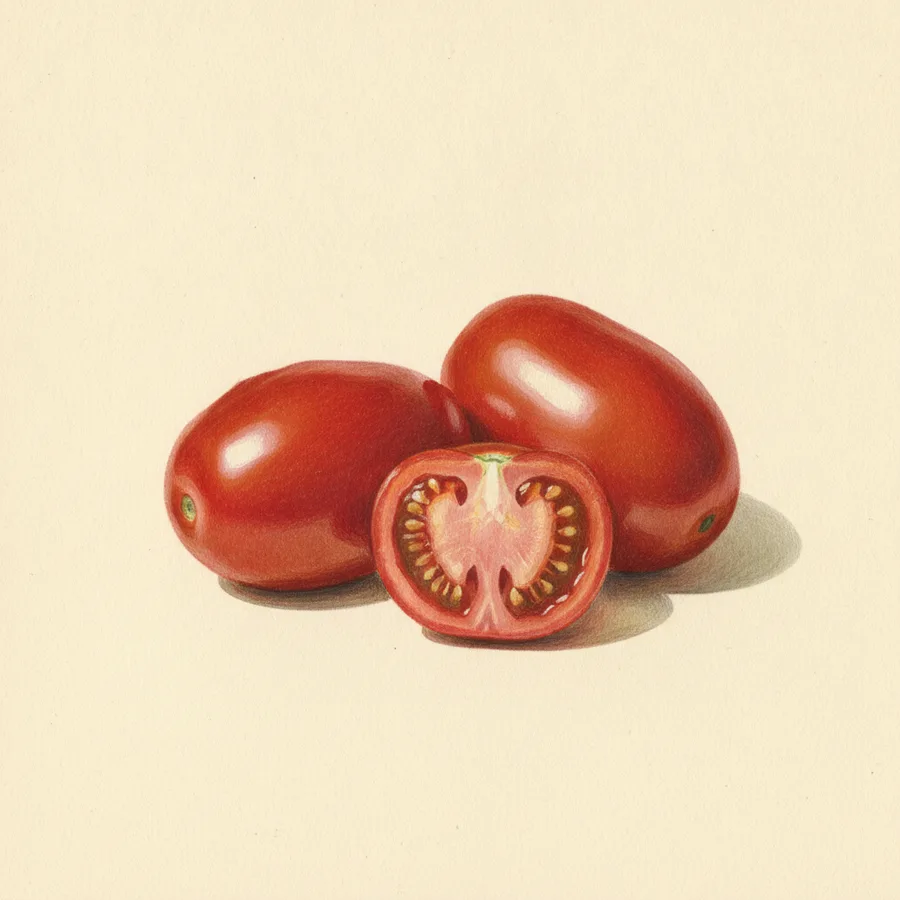
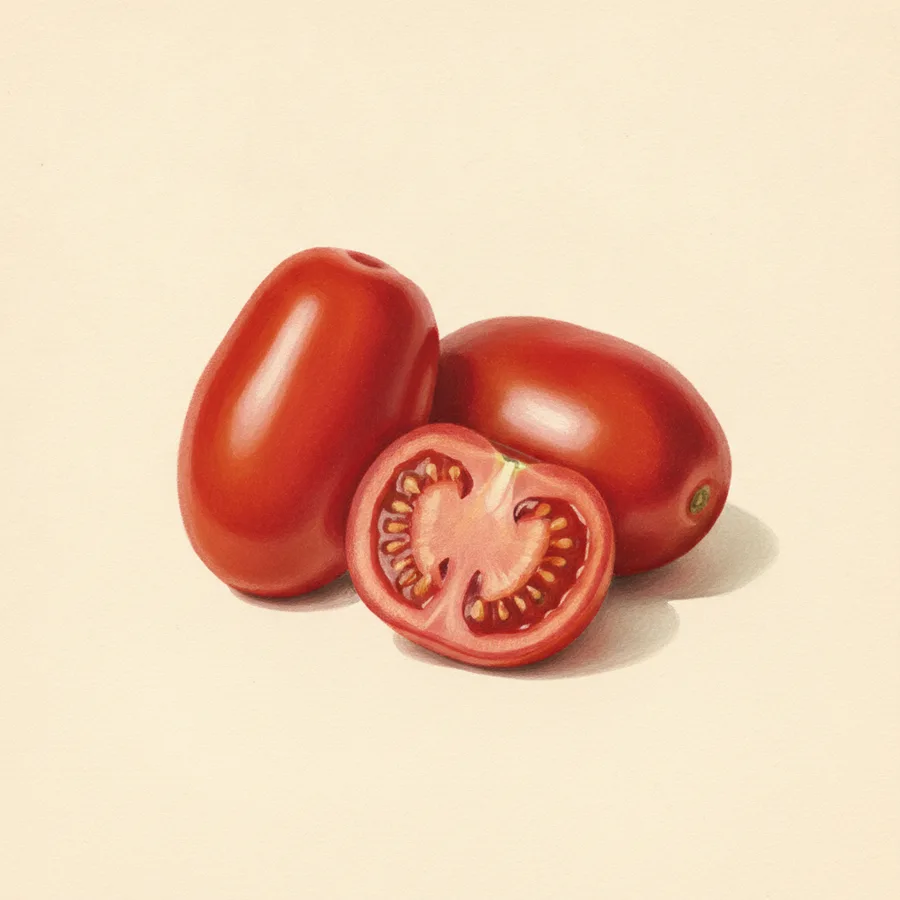
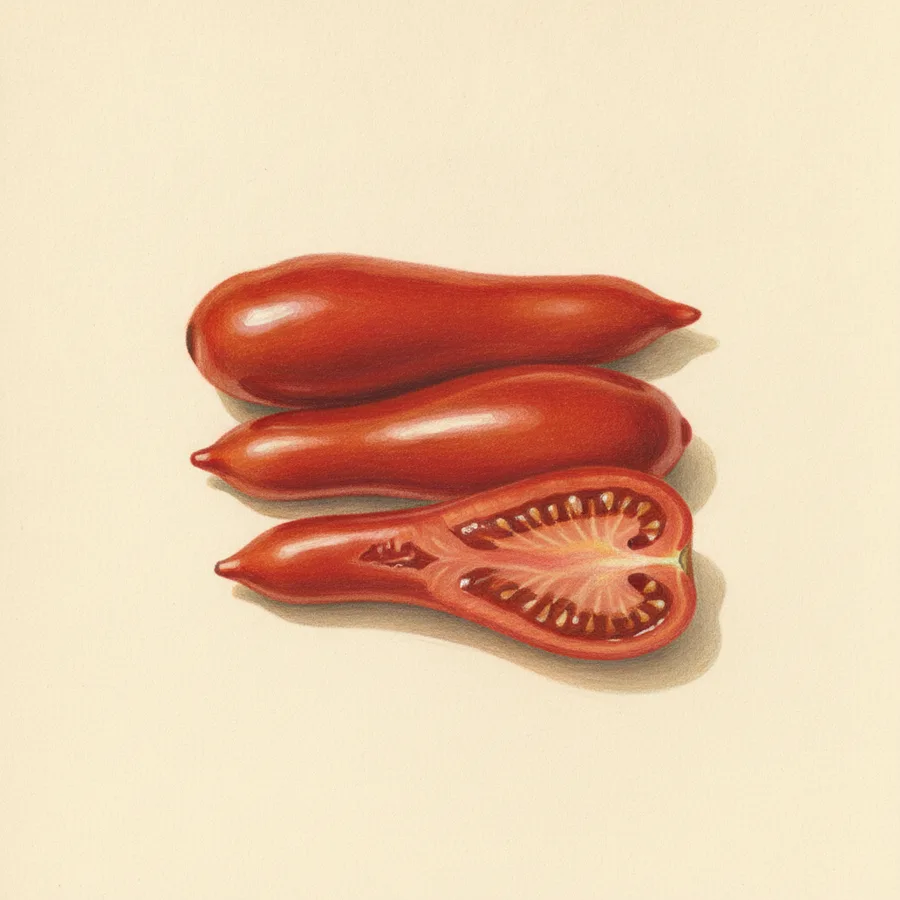
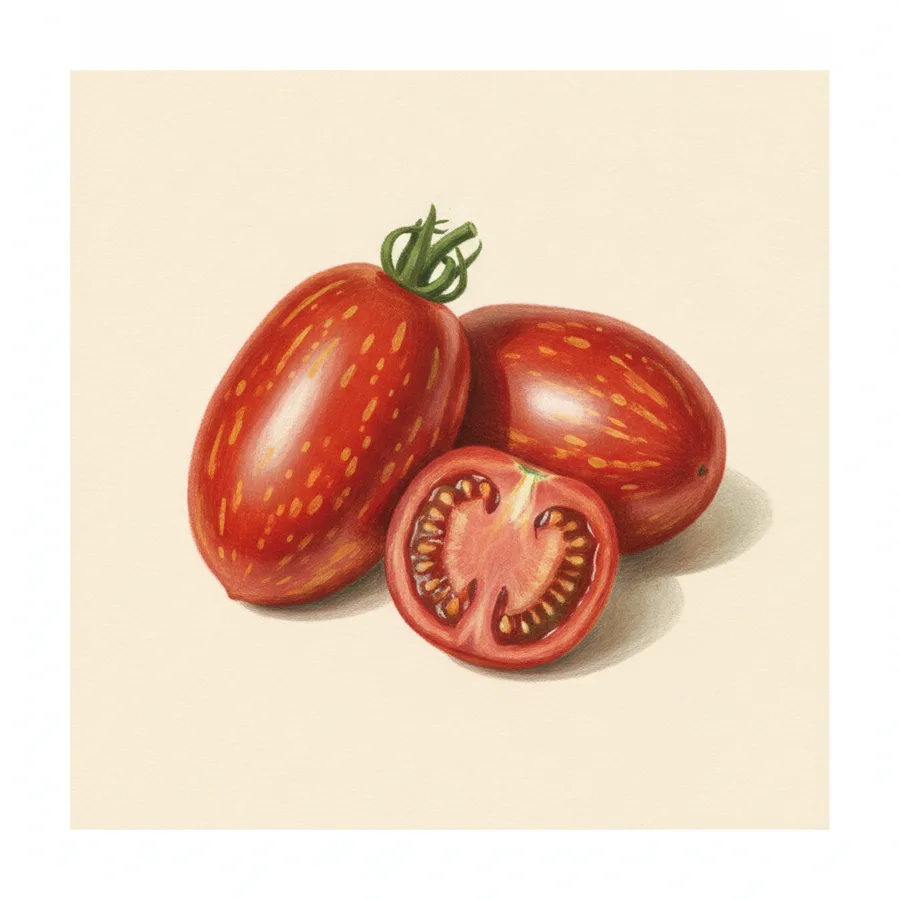
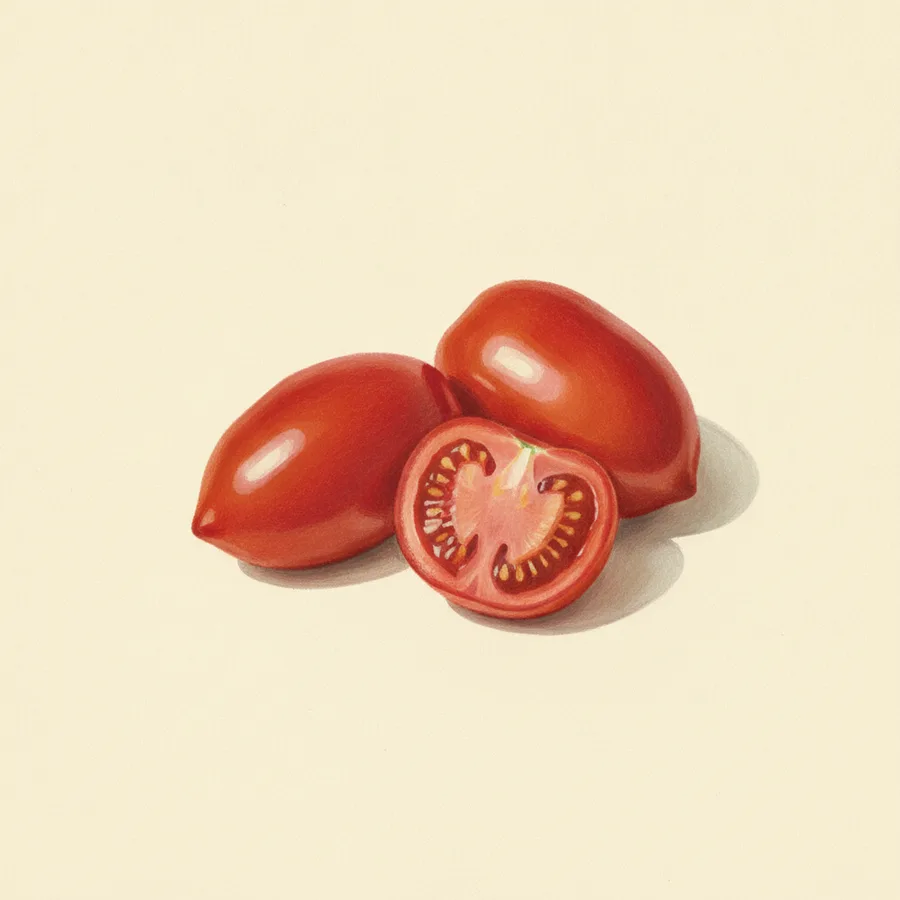
Paste types are the obvious canning and sauce candidates, and the reason is water content rather than flavor. San Marzano, Amish Paste, Roma, Opalka, and Speckled Roman all carry dense, low-moisture, low-seed flesh that cooks down without hours of reduction. A glut of paste tomatoes is the easiest kind to handle, because the pile has an obvious destination.
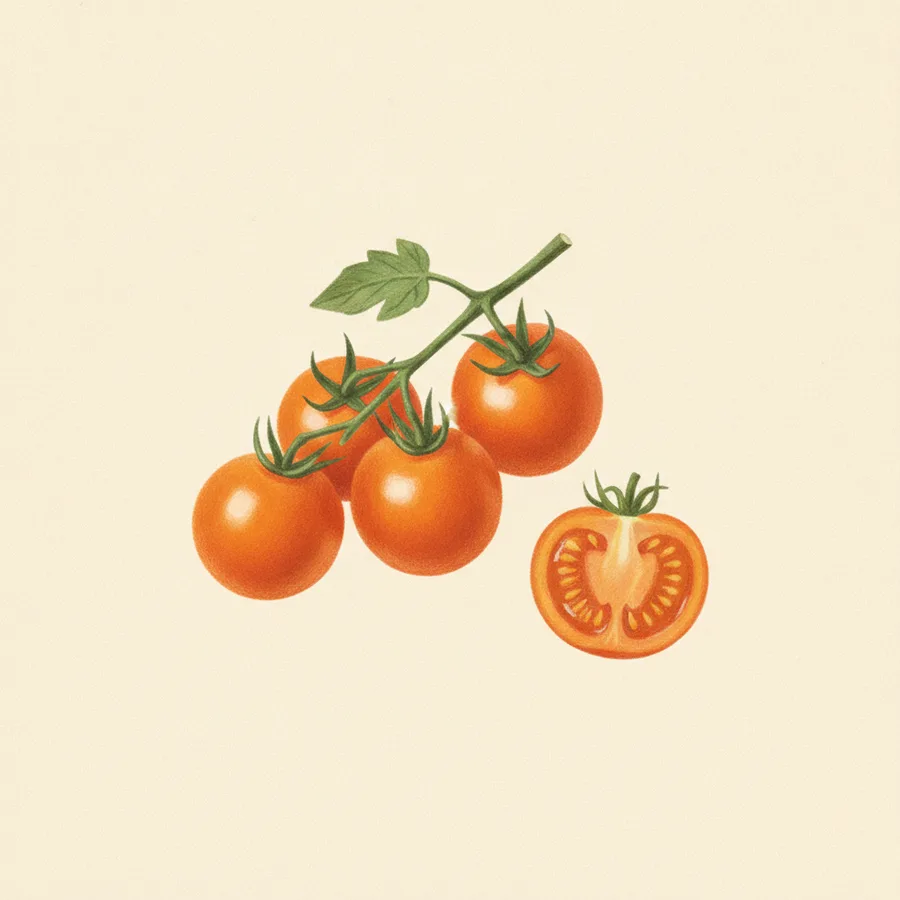
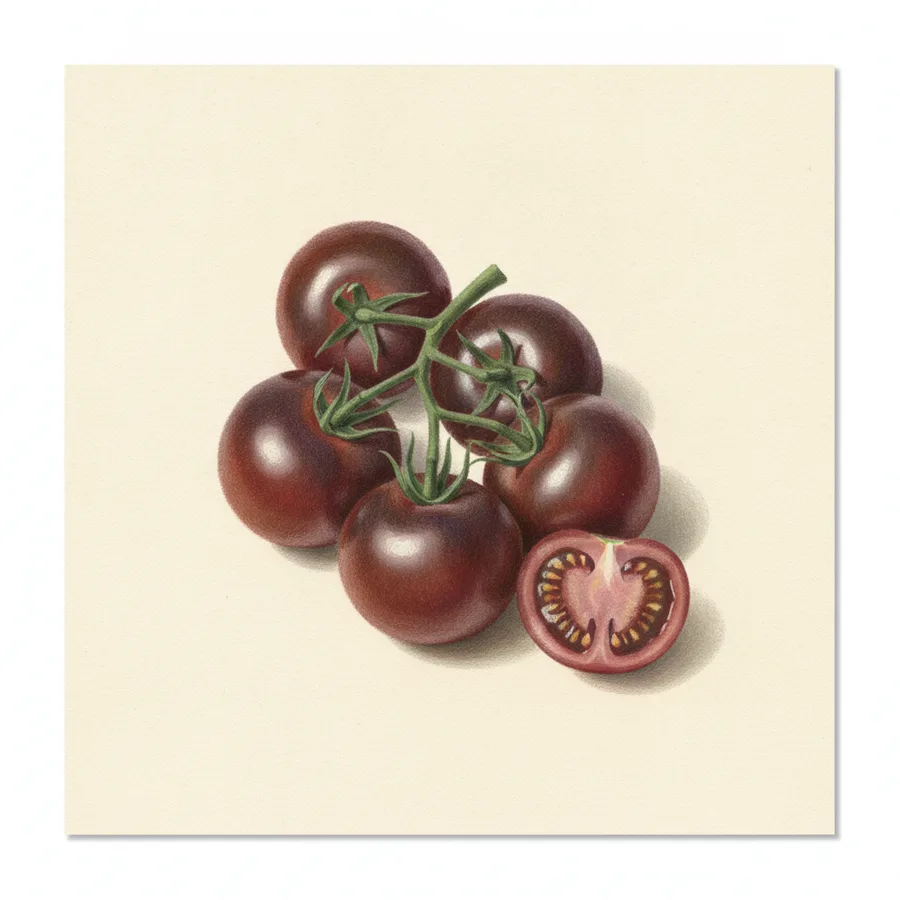
Cherry tomatoes are the opposite problem: too many, too small to peel, and they go over fast. Halve and dry them. Principe Borghese exists for this specific purpose, having been grown for drying long before it was grown for salads, and Sungold and Black Cherry both concentrate into something worth having in February.
Big slicers and beefsteaks are the awkward middle. They are too wet to be efficient sauce and too good to waste on it. Eat those now, give them away, and put the paste types up instead.
If most of your pile is one type, the variety pages linked below note which are worth the jar and which are better fresh.
The green ones at the end of the season
This part is for six weeks from now, but it is easier to read before you need it.
Green tomatoes are more acidic than ripe ones, and the USDA guide states directly that they can be canned safely using its recommendations. Being more acidic does not exempt them from the acidification step, though. They get the same lemon juice or citric acid as everything else.
For ripening indoors, Colorado State University Extension puts the useful range at 55 to 70 degrees Fahrenheit. Near 70 they finish in about two weeks, near 55 in about a month, and below 50 degrees they ripen bland. They do not need light, so a dark cupboard is fine, but watch the humidity: too much and they mold, too little and they shrivel.
The fruit worth bringing in is anything at breaker stage or mature green, which CSU describes as showing a white to light green star shape at the blossom end. Fully immature green fruit will ripen to a color but never develop full flavor.
How long any of it actually keeps
NCHFP's guidance is that properly canned food stored somewhere cool and dry holds optimum eating quality for at least a year, and that jars stored near heat or in sunlight can lose quality in a matter of weeks or months. Store between 50 and 70 degrees, and take the ring bands off, which keeps the jars dry and makes a broken seal easier to spot.
That one-year figure is a quality guideline rather than an expiration date. It is worth being careful in both directions here, because the internet tends to round it into one of two wrong answers. Neither the USDA nor NCHFP sets a date after which properly processed food becomes unsafe, and neither of them certifies a sealed jar as safe forever.
What they do say is the part to actually act on. Discard any jar with a broken seal or any sign of spoilage, and do not taste it first. The USDA guide notes that spoiled tomatoes may show very different kinds of evidence or very little evidence at all, which means the absence of an obvious problem is not proof that there is not one.
Varieties mentioned
Keep reading
- When Are Tomatoes Ripe? A Variety-by-Variety GuideHalf a glut is really a timing problem. If you are picking everything at full color, you are picking later than you need to.
- Best tomatoes for canningWhich varieties hold up in a jar, and why paste types earn their reputation here.
- Best tomatoes for sauceIf most of the pile is headed for the pot, start with the varieties that cook down without watering it out.
- How to Save Tomato Seeds From Your Best PlantsA glut is the cheapest time to save seed. The fruit that got slightly ahead of you is exactly the dead-ripe fruit you want, and the flesh still gets used.
- Green Tomatoes and the First Frost: Which Ones Ripen Indoors and Which Ones Never WillThe season-end version of the same glut: what to do with everything still on the vine when frost is coming, sorted by whether it will actually ripen.
- End-of-Season Tomato Cleanup: What Actually Survives WinterWhen the glut ends and the bed comes out, this is what to do with the vines.
Sources
- How Do I Can Tomatoes? (acidification directions and current processing times) · National Center for Home Food Preservation
- USDA Complete Guide to Home Canning, Guide 3: Selecting, Preparing and Canning Tomatoes · USDA / National Center for Home Food Preservation
- Storing Home Canned Foods · National Center for Home Food Preservation
- Freezing Tomatoes · Nebraska Extension
- Freezing Tomatoes (thawed texture and use) · National Center for Home Food Preservation
- Herbs and Vegetables in Oil (SP 50-701) · Oregon State University Extension
- Drying Fruits and Vegetables (az1802) · University of Arizona Cooperative Extension
- Fresh Lemons vs. Bottled Lemon Juice for Canning · K-State Research and Extension
- Remember to Acidify Tomatoes When Canning · Michigan State University Extension
- Ripening Tomatoes Indoors · Colorado State University Extension
- Chilling-induced tomato flavor loss is associated with altered volatile synthesis and transient changes in DNA methylation (PNAS 2016) · Zhang et al., Proceedings of the National Academy of Sciences
- Flavor-Related Quality Attributes of Ripe Tomatoes Are Not Significantly Affected Under Two Common Household Conditions · Kanski et al., Frontiers in Plant Science